Kashmir · A congregational mosque established in the fourteenth century
Jamia Masjid, Srinagar
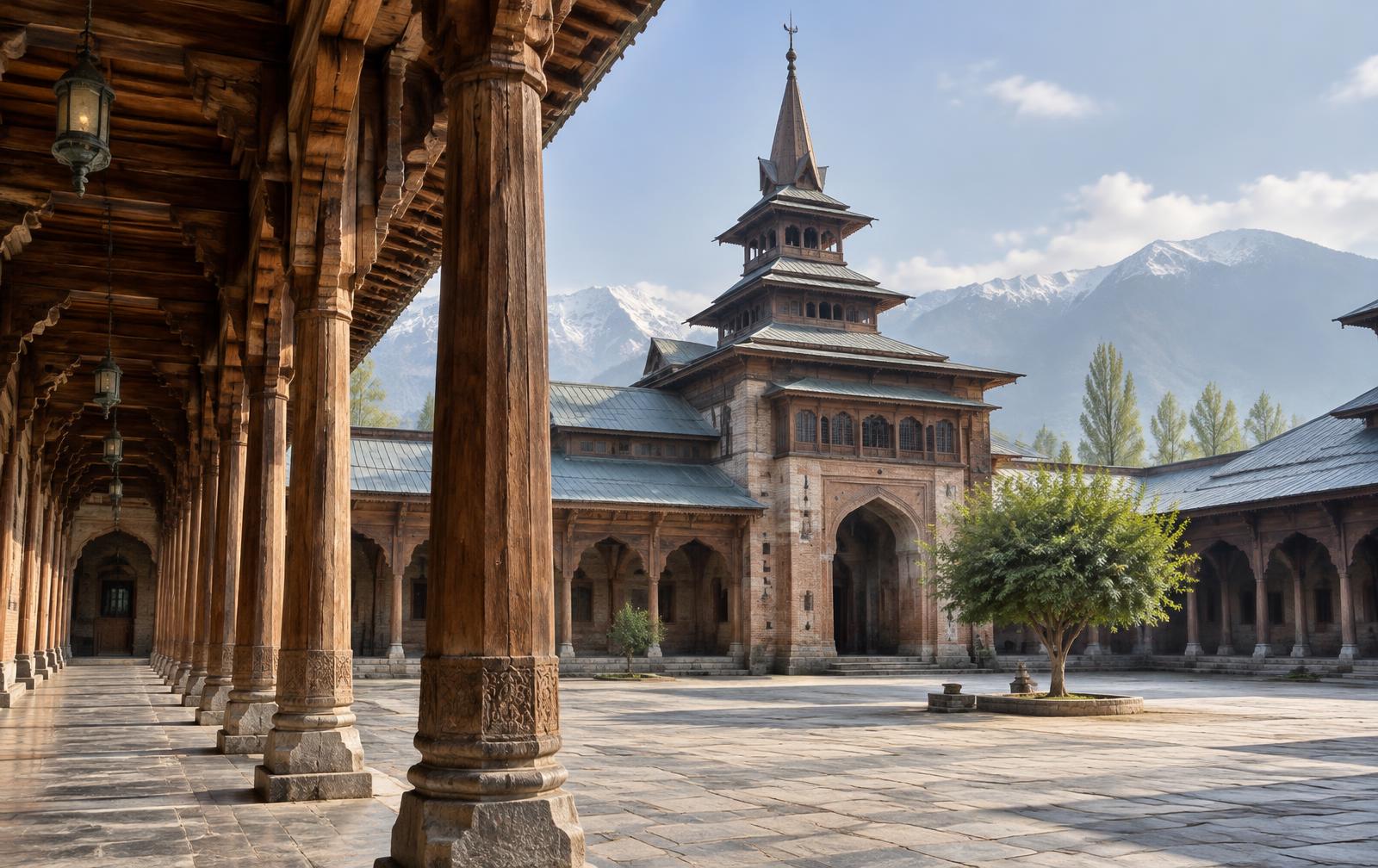
Towering deodar pillars, a peaceful courtyard, and an architectural language unmistakably rooted in Kashmir.
A little history
The place behind the view
Srinagar's Jamia Masjid was established under Sultan Sikandar around the turn of the fifteenth century and was later repaired and expanded after major fires. Its great courtyard and pillared halls are supported by hundreds of deodar columns. The mosque's timber construction and distinctive spired forms connect congregational architecture with the valley's own materials and building traditions.
Entering Jamia Masjid from the dense streets of old Srinagar feels like stepping into another measure of space. The courtyard opens widely, and the surrounding structures draw the eye towards their roofs and spires. I pause before moving closer, because the transition from crowded lane to open sacred space explains so much about the mosque's place in the city.
Inside, the deodar pillars create an extraordinary forest of timber. Their height and repetition give the hall its grandeur, but the material keeps the atmosphere warm and grounded. This is where Kashmir's architectural character speaks most clearly to me. Rather than relying on a monumental central dome, the mosque brings together local woodworking, pitched roofs, and forms associated with Central Asia in a composition of its own.
The building's history of fire and restoration also matters. What I see is not an untouched fourteenth-century interior but a sacred place repeatedly renewed by its community. That continuity makes the architecture feel resilient rather than fragile. Outside again, the surrounding bazaars and old neighbourhoods complete the visit, reminding me that the mosque has long stood at the centre of both spiritual and civic life.
“The first impression is scale; the lasting one is calm. Repetition in the wooden columns creates a rhythm that feels both grand and intimate, while the open courtyard brings sky and silence into the centre.”Read the historical source: Srinagar District — Tourist Places