Rajasthan · A Rathore citadel begun in 1459
Mehrangarh & Jodhpur
A formidable hilltop fort, blue-washed neighbourhoods, and the enduring courtly culture of Marwar.
A little history
The place behind the view
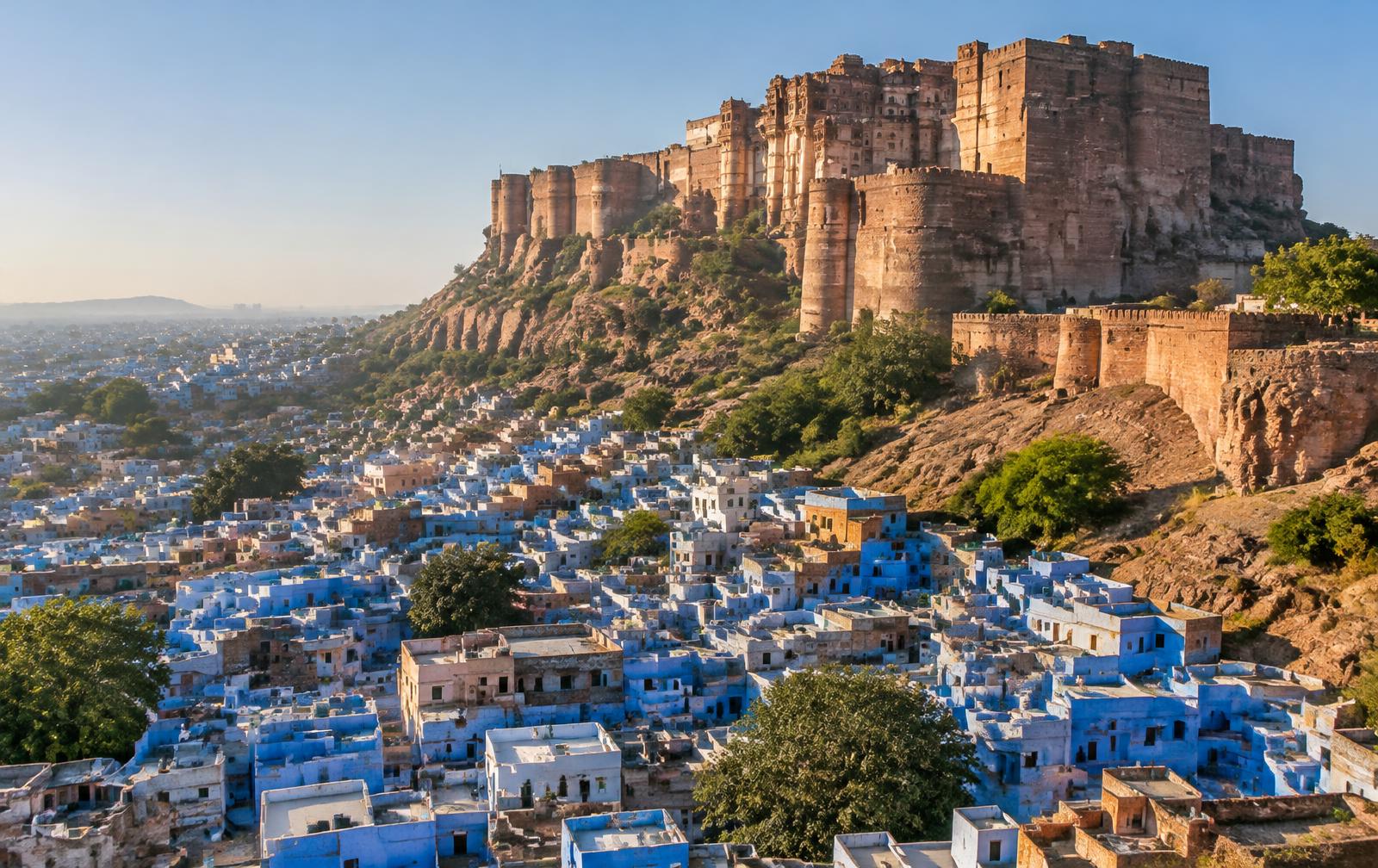
Rao Jodha founded Jodhpur in 1459 and began Mehrangarh on a rocky hill above the new city. Successive Rathore rulers added palaces, courtyards, and gates, creating a citadel that records several centuries of Marwar's political and artistic history. Its museum collections connect architecture with painting, textiles, arms, music, and royal ceremony.
The approach to Mehrangarh builds anticipation. The road rises, the walls grow taller, and each gate changes the view back across Jodhpur. Marks and memorials around the entrances remind me that this was a working stronghold, not merely a palace with a dramatic view. Once inside, the heavy exterior gives way to courtyards framed by perforated screens and richly decorated rooms.
I am especially drawn to the objects that show how the court functioned: palanquins, cradles, musical instruments, paintings, and ceremonial dress. They make it easier to imagine processions, audiences, festivals, and family life within these walls. The fort's architecture becomes more meaningful when it is read alongside those objects, because power was expressed through ritual and patronage as much as through military strength.
Below the fort, the old city offers a contrasting perspective. Blue-painted houses cluster around lanes that lead towards stepwells, temples, and markets. The colour is often described simply as picturesque, but the neighbourhood is also a living social fabric. After the grandeur of Mehrangarh, I enjoy the smaller discoveries below—a carved doorway, a workshop, the echo of a stairwell—because together they make Jodhpur more than its skyline.
“Mehrangarh feels monumental without becoming distant. From its ramparts I see the dense city below; inside, a painted ceiling or a quiet courtyard suddenly brings the experience back to a human scale.”Read the historical source: Mehrangarh Museum Trust