Rajasthan · A sacred lake town of pilgrimage and exchange
Pushkar
Temple steps, desert traditions, and a lakeside town where ritual and everyday life share the same space.
A little history
The place behind the view
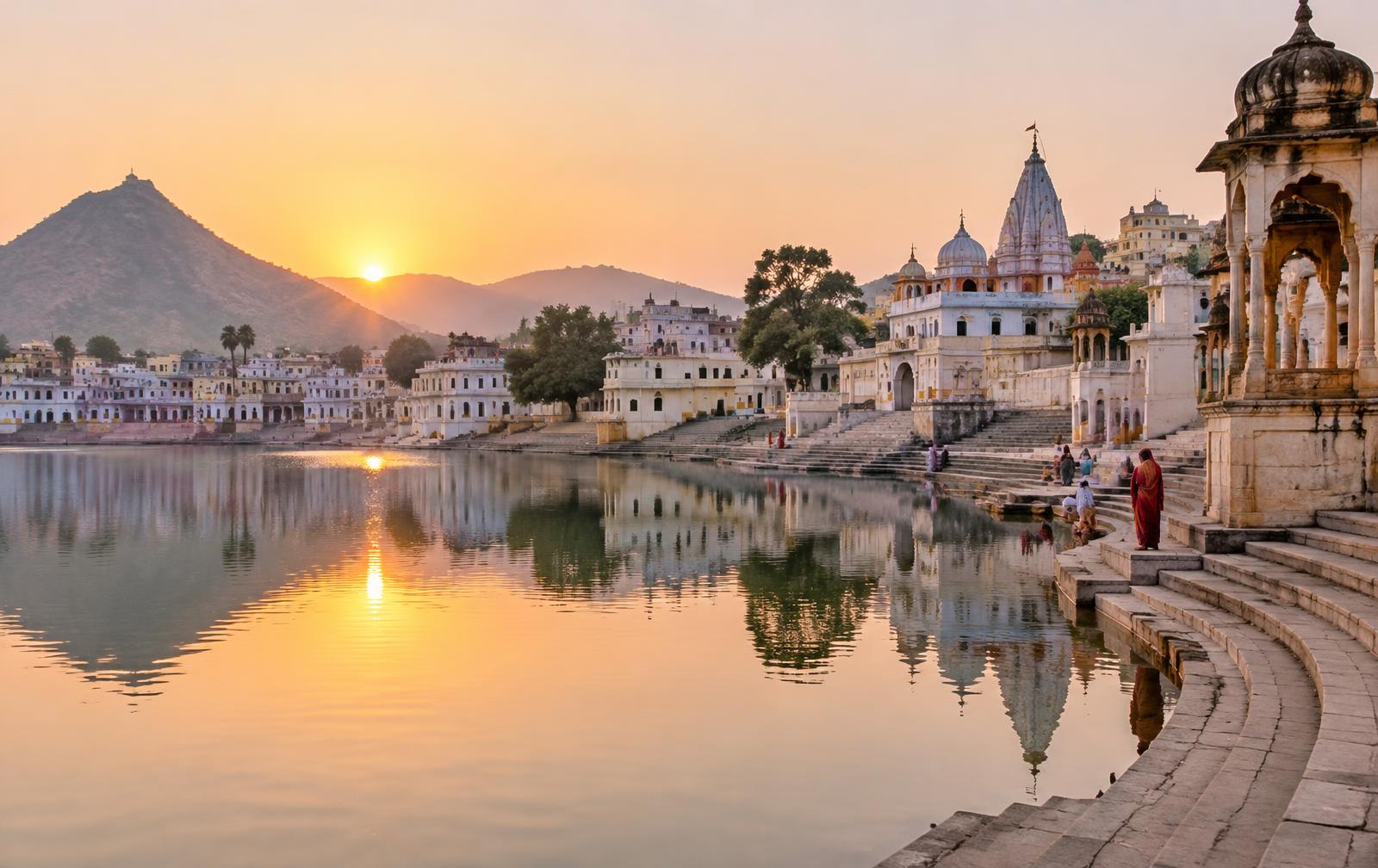
Pushkar is one of Rajasthan's oldest pilgrimage centres, gathered around a lake associated in Hindu tradition with Brahma. Its ghats and temples have been rebuilt and renewed over many centuries, while the town's Brahma Temple remains especially significant. The annual Pushkar fair adds another dimension, bringing livestock trading, religious observance, performance, and rural exchange together.
I arrive at the ghats slowly and find a place to sit away from the busiest steps. The lake holds reflections of temples and pale buildings, but the activity around it constantly changes the scene: prayers at the water, bells from a shrine, people crossing between lanes, and pigeons rising together. Pushkar's atmosphere comes from this movement between stillness and ritual.
The Brahma Temple gives the town a particular place in India's sacred geography. Yet I find the wider network of smaller shrines and connected lanes just as revealing. Pilgrimage here is not confined to one monument; it shapes streets, accommodation, food, music, and the rhythm of the day. Even a simple walk around the lake becomes a lesson in how sacred geography is kept alive through repeated practice.
Pushkar's fair traditions broaden that picture. The gathering is widely known for its camel trading, but it also represents an older meeting point for desert communities, goods, stories, and celebration. I like remembering that the contemplative lake town and the energetic fairground are not separate identities. They are two expressions of a place long sustained by journeys—both spiritual and practical.
“Pushkar feels most meaningful when I stop treating the lake as a view and begin seeing it as a place of relationship—between pilgrims, priests, traders, travellers, and the town itself.”Read the historical source: Incredible India — Brahma Temple, Pushkar