Kashmir · A spring and garden renewed under Jahangir
Verinag Spring
Clear water, an octagonal stone basin, and a quiet meeting of Mughal design and natural abundance.
A little history
The place behind the view
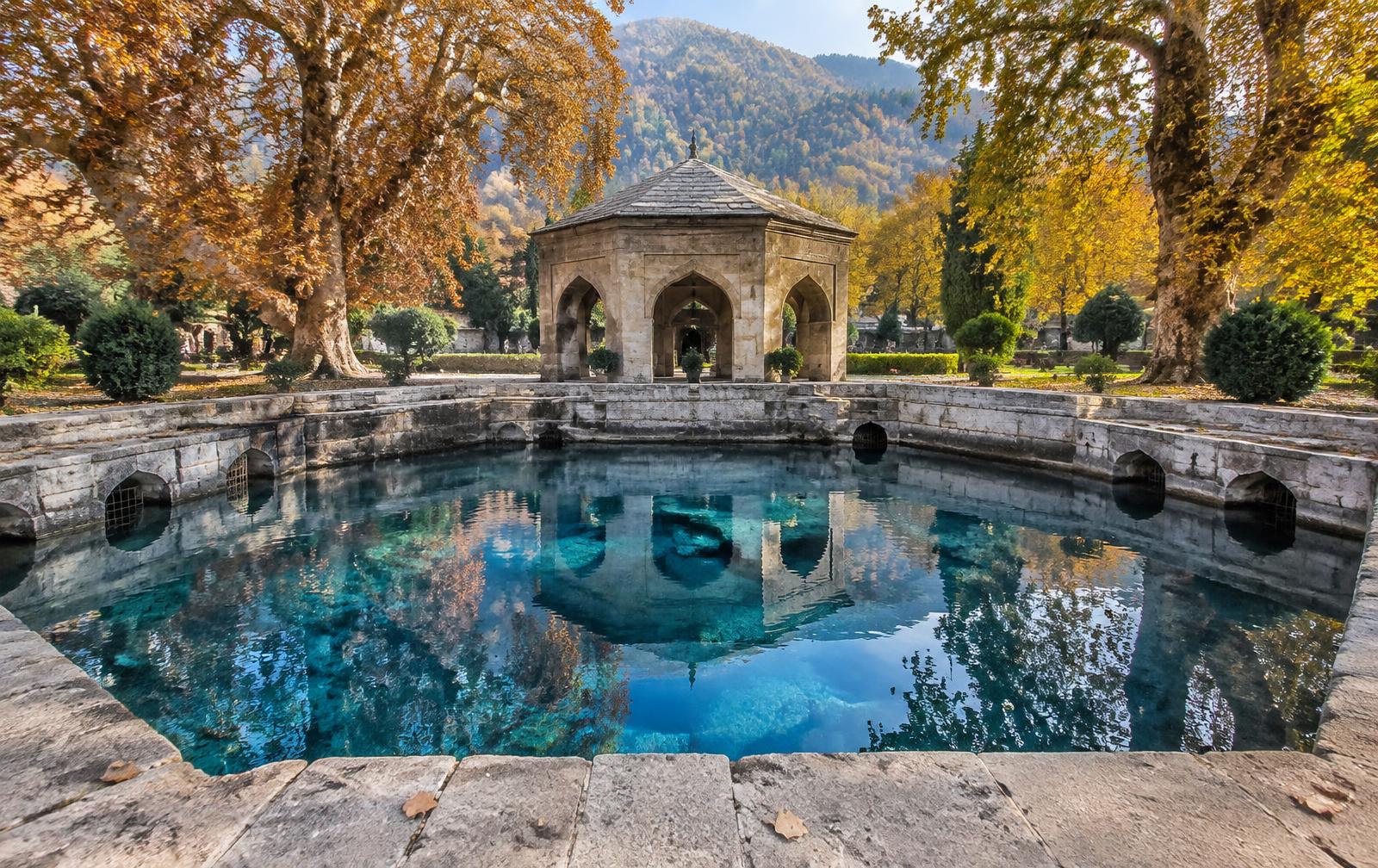
Verinag is traditionally identified as a principal source of the Jhelum River. Emperor Jahangir commissioned an octagonal stone basin around the spring and a garden nearby, with later additions under Shah Jahan. The site joins a significant natural feature with Mughal architecture, directing attention towards the water through geometry, arcades, and planted space.
Verinag feels quieter than the famous gardens of Srinagar, but it rewards the same slow attention. I watch the water within the octagonal basin and follow the channels outward, where the garden gives the spring room to breathe. The colour and clarity change with the light, while fish and reflections add movement to an otherwise perfectly measured space.
The octagon matters because it gives form to something naturally uncontained. Rather than overwhelming the spring with a monumental façade, the architecture gathers around it. Arches and walks offer places from which to look, sit, and listen. I find that restraint moving: imperial patronage is certainly present, but the water remains the centre of the composition.
The place carries several kinds of meaning at once: a source associated with the Jhelum, a landscape remembered in local tradition, and a site shaped by Mughal patronage. Nearby orchards, trees, and mountain air soften the stone geometry. I leave with the sense that good landscape architecture can honour a natural feature simply by helping us notice it.
“The water is the first thing I remember: strikingly clear, held in a precise stone shape. At Verinag, the meeting of nature and design feels especially gentle. The architecture draws attention to the spring rather than competing with it.”Read the historical source: Anantnag District — Tourist Places