Rajasthan · A desert stronghold, founded 1156
Jaisalmer Fort
Golden stone, intricate havelis, and narrow lanes where a historic fort remains part of daily life.
A little history
The place behind the view
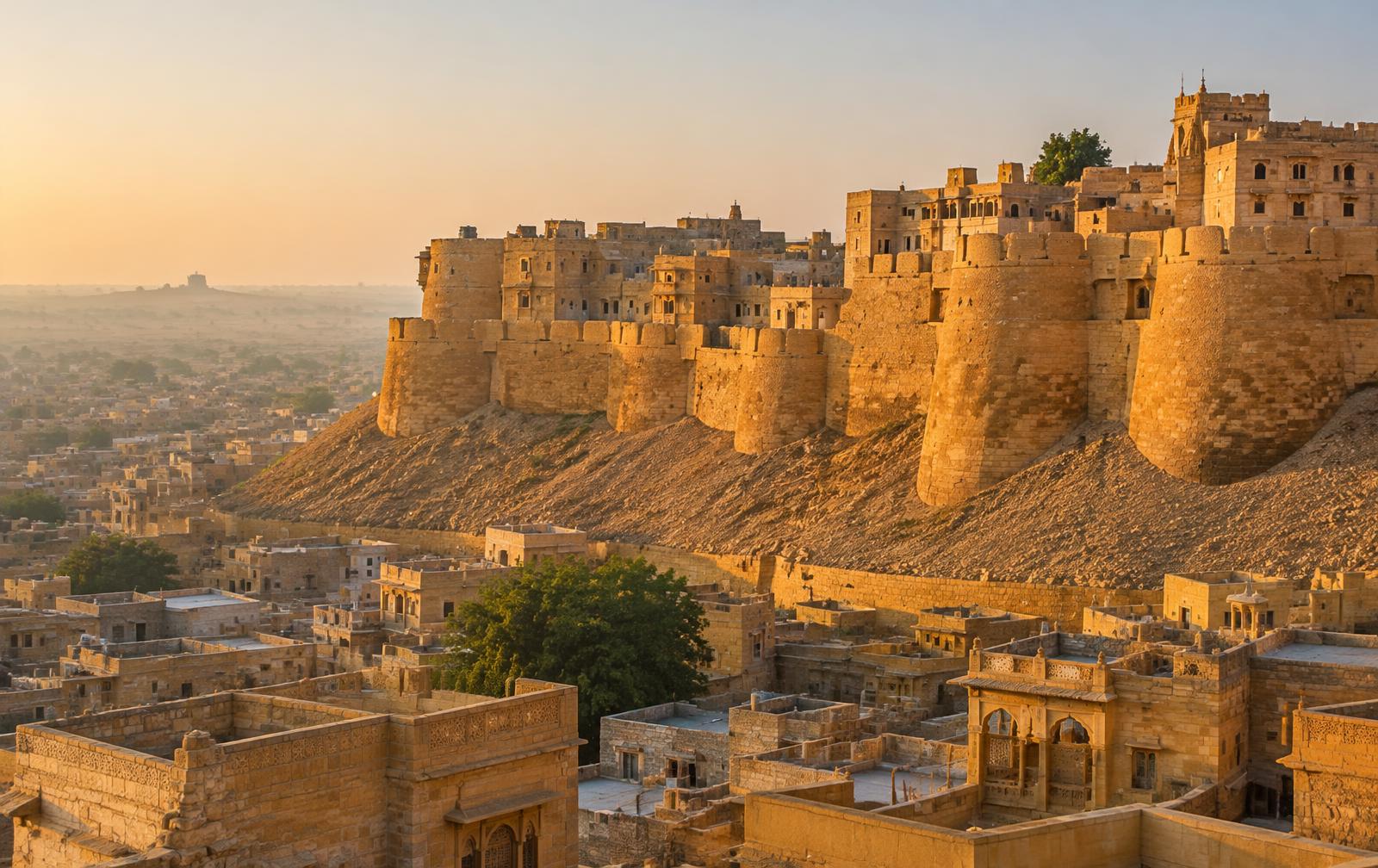
Rawal Jaisal founded Jaisalmer in 1156 on Trikuta Hill, strategically placed on routes crossing the Thar Desert. The fort is one of the six sites in UNESCO's Hill Forts of Rajasthan listing. Its walls enclose palaces, Jain temples, homes, and historic trading streets, while merchants later adorned the town below with richly carved havelis.
From a distance, Jaisalmer seems to rise straight out of the desert. Up close, its scale becomes intimate: a turn in the lane reveals carved stone screens, a small shrine, or a balcony leaning above the passage. The fort's gateways slow the climb and make the old defensive logic visible. I find myself looking up often, because the most delicate work is sometimes several storeys above the street.
The Jain temples within the fort reward patient looking. Their marble and sandstone carvings create a world of fine geometry and sacred imagery, very different from the massive outer ramparts. That contrast is what fascinates me: the same settlement had to project strength towards the desert while creating spaces of extraordinary refinement within. The havelis of wealthy traders extend that story into the town, where façades became expressions of family status and craft.
Jaisalmer also makes me think about the responsibilities that come with a living monument. Water, crowds, modern services, and conservation all meet inside a fabric built for another century. Walking here is a privilege precisely because it is not an empty set of ruins. The worn thresholds, temple bells, and views from the bastions belong to a continuing urban life that needs care as much as admiration.
“What stays with me is that the fort is not sealed away from life. Everyday sounds travel through its lanes, and the honey-coloured stone changes with the sun. History feels close because people still make a home here.”Read the historical source: UNESCO — Hill Forts of Rajasthan